Choices to make
Urns, scatter tubes and keepsakes
Ashes come back in a plain container that will do perfectly well for as long as you need it to. Everything past that point is a decision you are allowed to take slowly.
What ashes actually are, and why the container matters less than you think
After a cremation what remains is bone, processed to a fine, pale, sandy consistency. An adult’s ashes typically weigh between two and three kilograms and take up a little over three litres — considerably more than most people picture, which is worth knowing before ordering a small decorative urn online.
They come back in a sealed container with a label. It is functional and it will do indefinitely. Everything else on this page is an object chosen by the living, for the living, and there is no version of this where the person who died is better or worse served by mahogany.
The one decision worth taking slowly
The genuinely useful thing to know is that there is no deadline. Crematoria hold uncollected ashes for months and write to families before taking any further step. Funeral directors will store them without charge. The container they arrive in is sealed and stable.
This matters because the urn is almost always decided in the arrangement meeting, four days after the death, from a catalogue, at the worst possible moment for making an aesthetic judgement — and priced accordingly. There is nothing to stop you saying “we’ll deal with that later”, taking the ashes home in the crematorium’s container, and buying something in three months if you still want to.
Sharing ashes between people
There is no legal obstacle in the UK to dividing ashes, and it is far more common than families realise. Keepsake urns are made in matching sets for exactly this, and a funeral director will divide ashes on request without any fuss.
What causes trouble is not the law but the family. Ashes are the last physical thing, and disagreements about them can be bitter out of all proportion. Two things help: settle it before anybody opens the container, and remember that strictly the person who arranged the cremation is the one the crematorium will deal with — which is a legal answer, not a fair one, and is worth not needing.
Then what?
Scattering, burying, keeping, dividing, planting with a tree, putting some in jewellery, taking them somewhere on a specific date years later — all of it is done, all of it is normal, and most of it has fewer rules than people fear. What the actual rules are, including where you may and may not scatter, is on what to do with ashes .
The main types
Urns and containers, and what each costs
Included
The crematorium's container
Ashes are returned in a sealed plastic or heavy card container with a label. It is not beautiful, but it is secure, and a great many families never replace it.
- Free
- Perfectly adequate for scattering or burial
- Can be kept indefinitely
£20 – £45
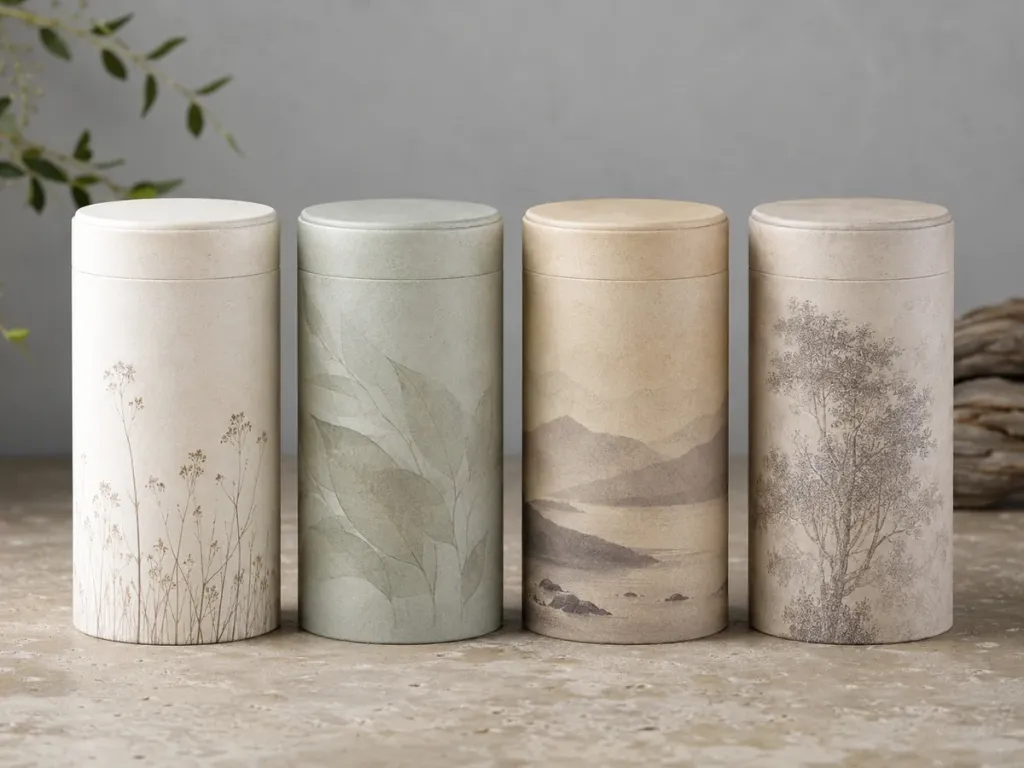
Scatter tube
A biodegradable card tube designed to make scattering straightforward — the lid comes away cleanly and the ashes pour rather than gust.
- Biodegradable
- Much easier to scatter from than an urn
- Sold in several sizes and designs
£60 – £200
Wooden urn
Oak, mahogany, ash or walnut, usually a plain box with a base plate. The most common choice for keeping ashes at home.
- Can be engraved
- Suitable for burial in a cemetery ashes plot
- Solid timber lasts indefinitely indoors
£100 – £350
Ceramic or hand-decorated urn
Glazed ceramic, often hand-painted. The category where the range is widest and where price has least to do with anything but design.
- Many designs, including matching miniatures
- Not suitable for burial without a liner
- Fragile — think about where it will live
£40 – £150
Biodegradable urn
Made of compressed paper, salt, sand or plant fibre, designed to break down in soil or dissolve in water within hours.
- For burial or water
- Water urns float briefly, then sink and dissolve
- Some are designed to be planted with a tree
£30 – £90 each
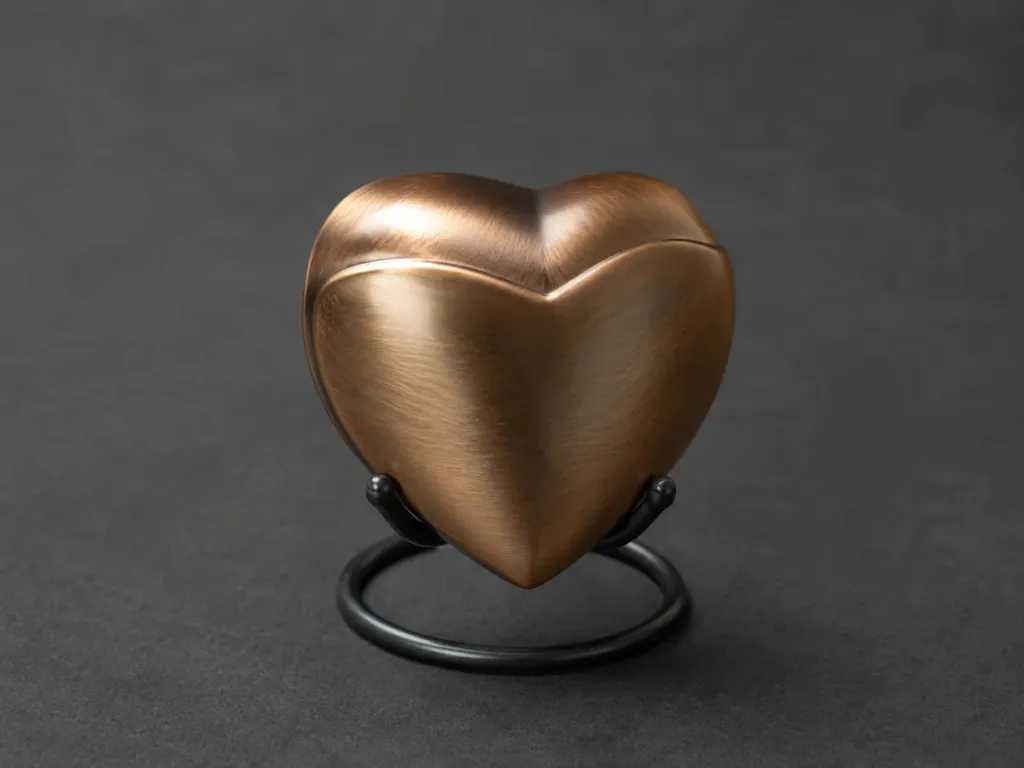
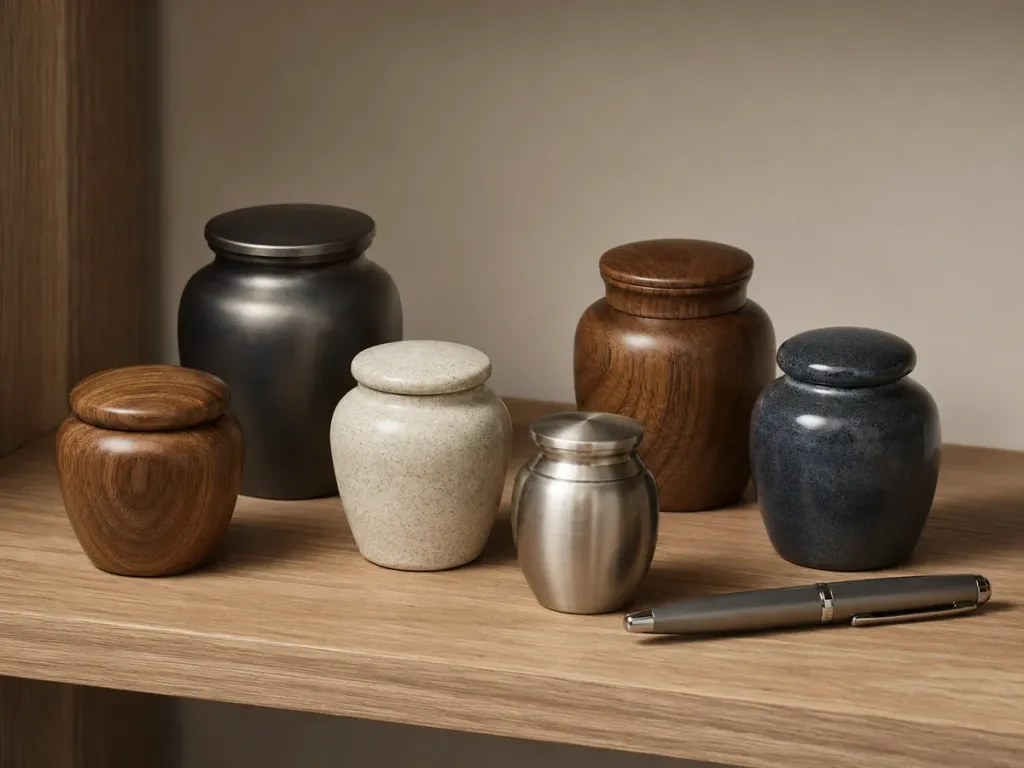
Keepsake or mini urn
A small urn holding a portion of the ashes, so that several people can each have some. Frequently sold to match a full-size urn.
- For dividing ashes between family
- Often bought in sets
- Small enough to hold in one hand
£50 – £500
Ashes jewellery
A pendant, ring or bangle with a small sealed chamber. Sometimes ashes are set into glass or resin rather than enclosed.
- Holds a very small quantity
- Have it filled and sealed professionally
- Quality varies enormously — buy carefully
£150 – £400
Casket for two
A companion urn sized for two people's ashes, usually bought when one partner has died and the other intends their ashes to join them.
- Sealed and reopened later
- Common where ashes will eventually be buried together
Typical UK retail prices. Urns are one of the few things connected with a funeral where buying online is straightforward, unhurried and usually much cheaper — and where there is no reason at all to decide in the arrangement meeting.
There is no deadline
Crematoria and funeral directors will hold ashes for months at no charge, and the container they come in will keep them safely for years. Nobody has to decide this in the first fortnight.
Buy it later, and elsewhere
Urns bought through a funeral director in the arrangement meeting are typically the dearest you will find. Nothing stops you buying one online a month later.
Ashes can be divided
There is no legal difficulty in splitting ashes between family members, and keepsake urns exist for exactly that. It is far more common than people imagine.
Questions people ask us most
How and when are ashes returned after a cremation?
Do I have to buy an urn at all?
What is a scatter tube and is it worth £30?
Can the ashes be shared between family members?
Can ashes be buried, and does that need a special urn?
Are ashes really the person's ashes?
You do not have to work this out in one sitting
Very little has to be done on the first day, and almost nothing has to be decided tonight. Start with the step-by-step guide, and if you need a person rather than a page, the helplines are free and answered by people who do this every day.